

VR travel skills practice for schools and support organisations
Give learners a safe place to practise
A learner may understand an explanation and still find it difficult to act in an unfamiliar situation. Virtual Public Transport gives teachers and support professionals another way to practise those moments together.
Small steps towards everyday independence
Guided by the learner’s needs
The focus is on practical skills, confidence and everyday participation. The learner’s needs and pace guide the process. Suitability should be considered individually, including comfort with a headset and the sensory demands of the experience.
Virtual Public Transport is designed for neurodivergent learners who need support with travel skills. It can complement learning and support around participation, preparation for work placements and everyday independence.
There is no single pace or fixed training duration that suits everyone.
A practical addition to teaching and support
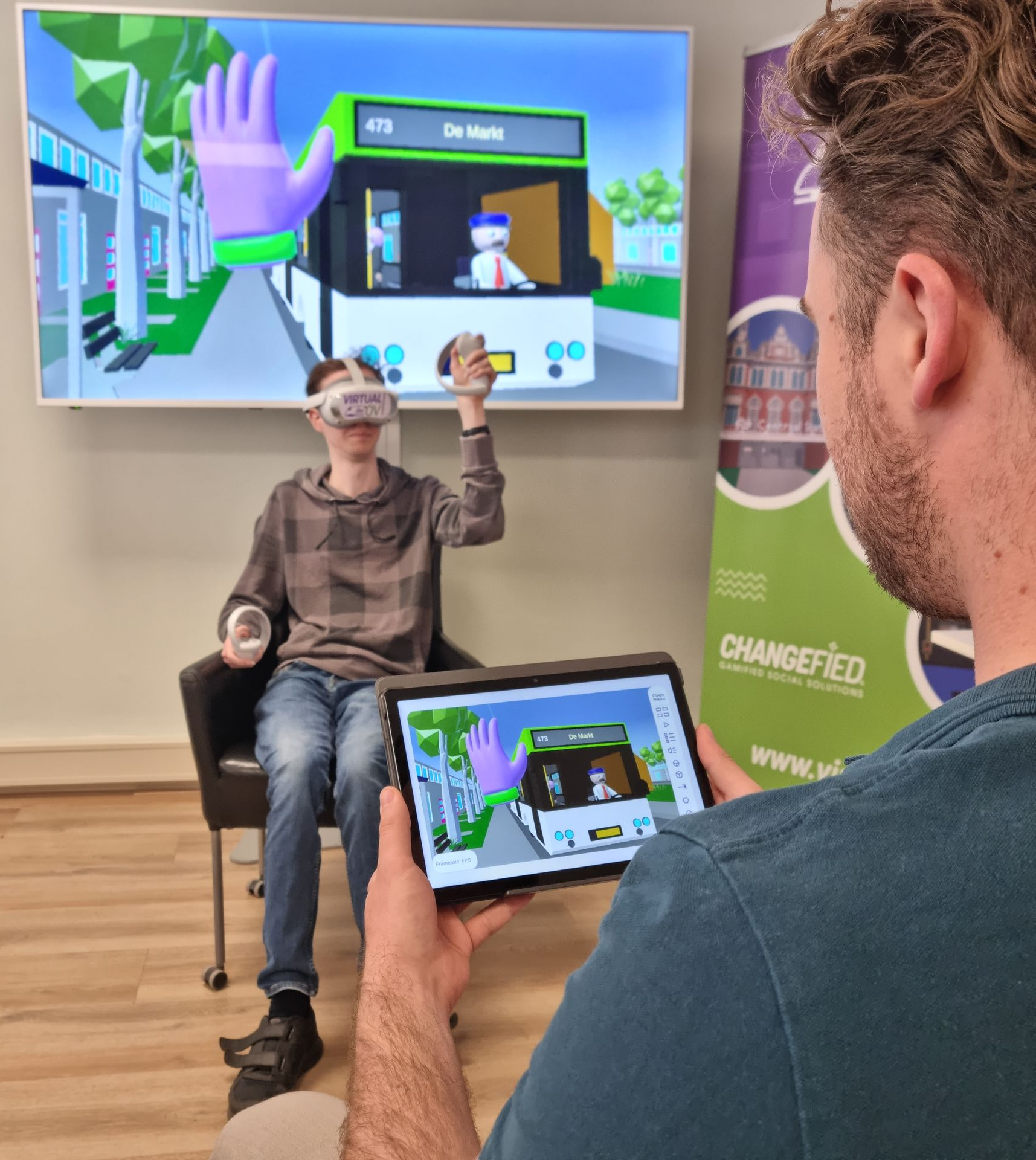
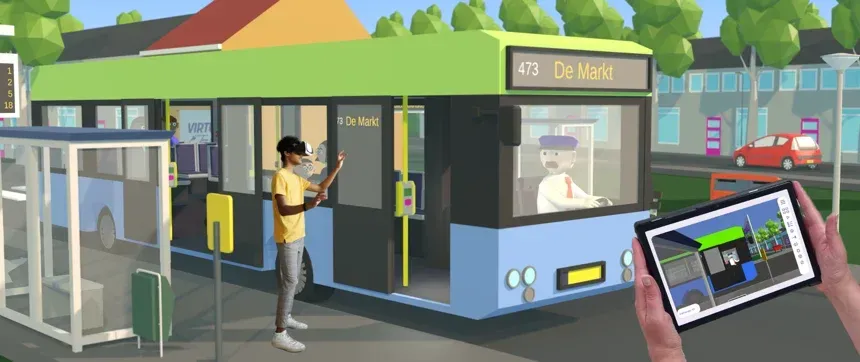
Use VR alongside explanation, reflection and real-world practice. Select situations that fit the learner’s goals, observe what happens and discuss the choices they make.
A learner might need to practise recognising travel information. Another might benefit from rehearsing how to ask for help.
What can learners practise?
Planning a journey
Recognise travel information and put the steps of a journey in order.
Choosing a service
Read route numbers, directions and information displays.
Responding to changes
Consider a next step when a journey does not go as planned.
Asking for help
Rehearse a question for transport staff and discuss what happened.
Space to act, reflect and repeat
The environment provides opportunities to practise planning, paying attention, remembering information and making choices as part of a travel activity.
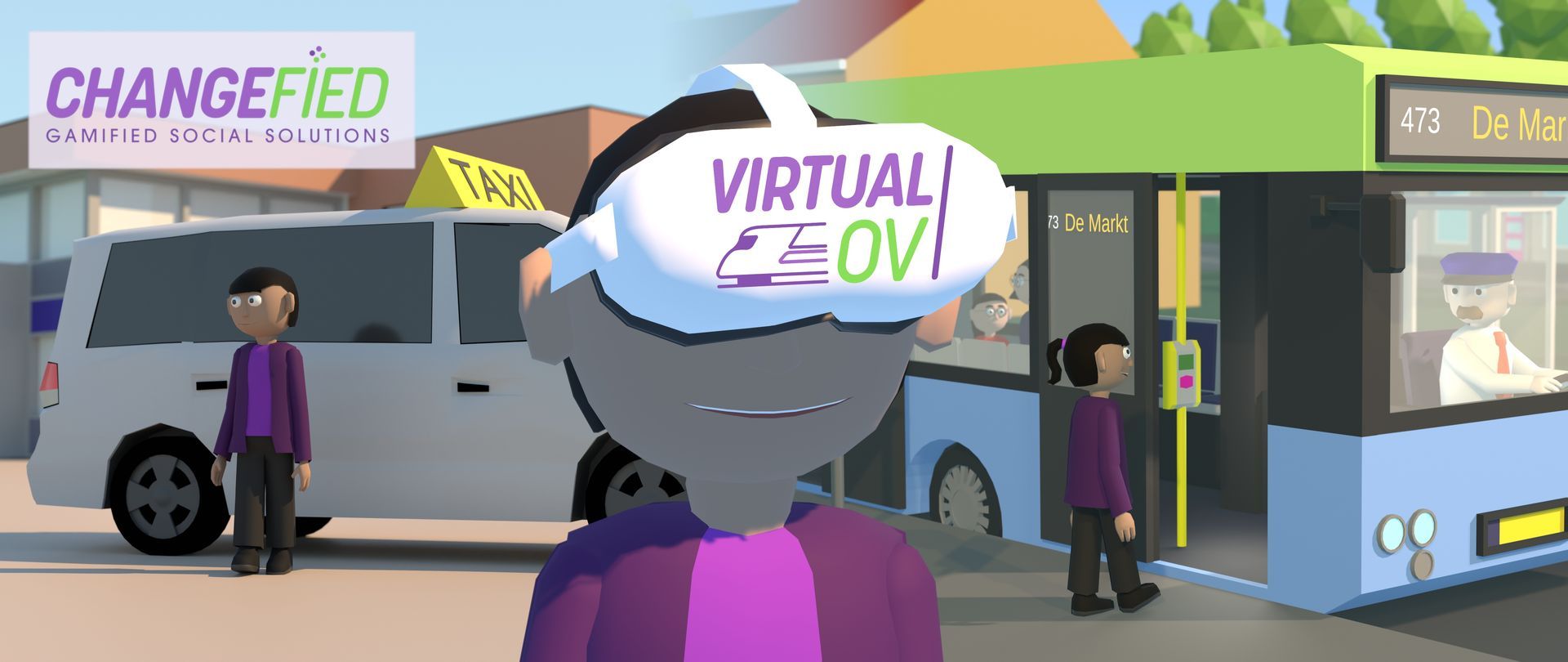
Repeated practice lets learners revisit actions and discuss their choices. Teachers and trainers decide which activities fit the learner’s goals and how to assess progress.
VR practice alone does not establish that a skill will transfer to a real journey. That link needs practical support and assessment.
Connect practice to daily life
The VR environment trains generic travel skills in a fictional setting rather than a personal route. Your team makes the link to the learner’s own journey, using suitable practical activities and support.

Progress at an individual pace
The aim is to make practice manageable and support steps towards greater independence. Not every learner will travel independently and outcomes depend on individual needs, goals and support.
The professional remains essential
Teachers, trainers and support professionals choose learning goals, adapt guidance and assess what a learner can apply outside VR.
The module does not diagnose a condition or replace individual support. Use observations from the experience to inform discussion and practical learning.
Plan implementation around your setting
Discuss suitable hardware, staff preparation and how the activities fit existing lessons or support. Begin with a clear learning goal and provide guidance that suits each learner.
Contact us to explore the current module, training options and implementation requirements.
For school leaders and coordinators
Consider how travel skills practice fits your existing approach to independence, participation and preparation for further education or work.
Clarify who guides learners, how real-world practice is supported and how your organisation will monitor progress.
Experiences from Dutch practice
Our implementation work starts with learners and the professionals who support them. Examples from the Netherlands illustrate the context, rather than guarantee an individual outcome.
"Reizen met het Openbaar Vervoer heeft mij de vrijheid gegeven die ik nu heb."
Oud leerling - Spinaker Alkmaar
"Juf, als ik dit leer, kan ik later zelf met de trein naar mijn werk en hoef ik niet meer met het busje."
Leerling - De Kameleon Roosendaal
"Virtual OV is een echte gamechanger voor onze leerlingen."
Marloes Heidekamp - Kranenburg Praktijkonderwijs
"Wat Virtual OV zo effectief maakt, is de 'fun factor'. Als onze jongeren iets leuk vinden, dan gaat hun responsbrein Aan."
Dmitri Hazes – Kop-Zorg Alkmaar
Technical learning with Virtual TechLab
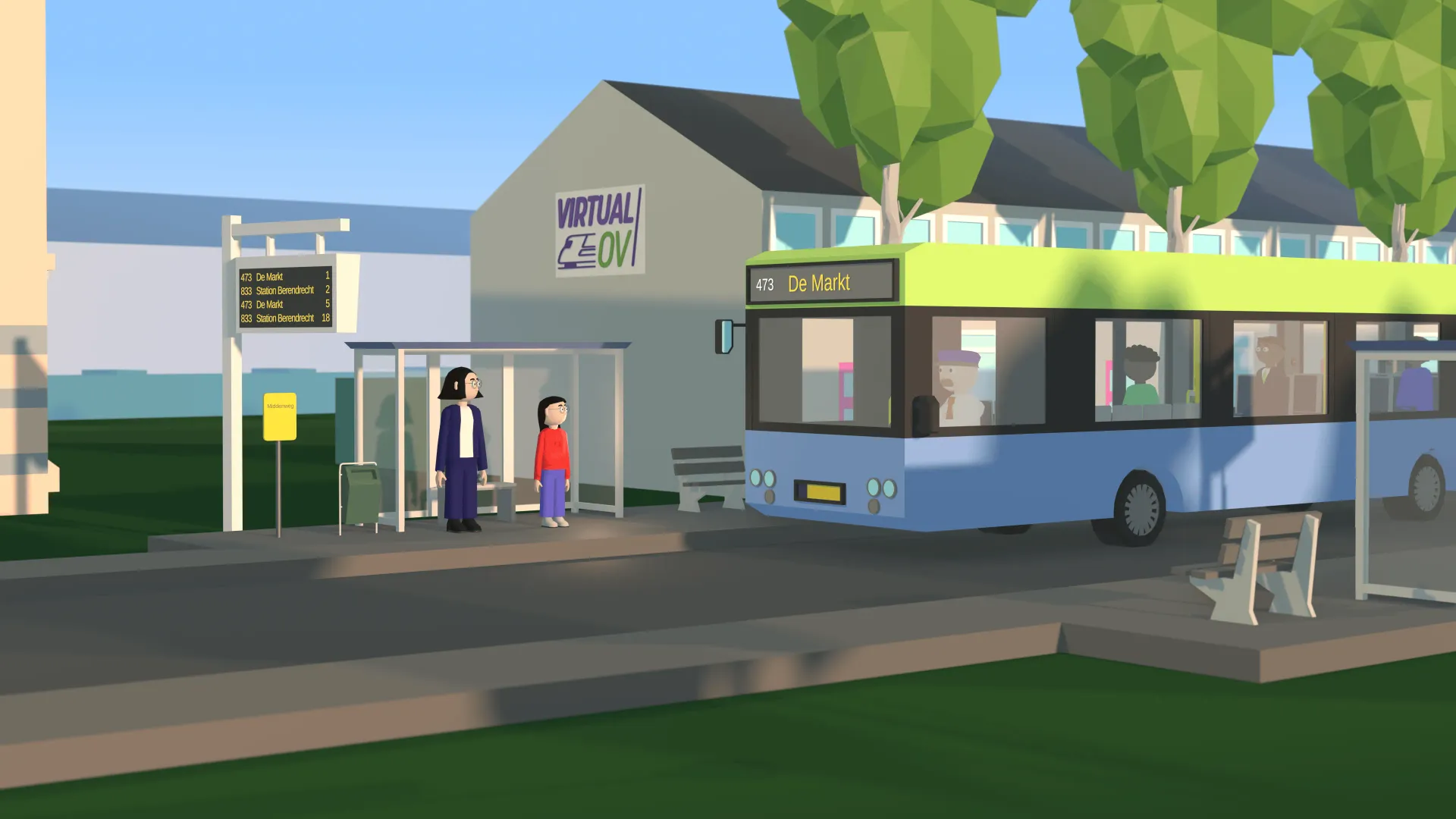
For technical and IT courses, Virtual TechLab offers a different practice setting: building a desktop PC in VR. Students can select components, place parts and connect cables before working with physical hardware.
Explore the Virtual TechLab page to learn more.
Organisations we work with

New Mobility Foundation

NS

Arriva

Kennisplatform
CROW




Questions about using the module
Who is Virtual Public Transport designed for?
Suitability is considered individually for neurodivergent learners who need support with travel skills.
Do teachers need previous VR experience?
We can discuss preparation and training for teachers and support professionals.
Can the module support citizenship education?
Your team chooses learning goals and makes the connection to its own curriculum and support plans.
Does VR replace real-world practice?
No. VR complements guided learning and real-world travel practice.
How can our organisation get started?
Start with a conversation about your learners, goals, equipment and practical requirements.
Thank you for contacting us.
We’ll get back to you as soon as possible.
We got it.
Discuss use in your organisation
Tell us about your learners and setting. We can explore suitable modules, hardware and staff preparation together.
Our current implementation focus is the Netherlands. International use may require adaptation and should be discussed before purchase.